What is an Online Community and How to Build One That Thrives
Online communities drive loyalty better than ads. Learn how to create an engaged community on Discord, Telegram, or your platform. Linkks.cc helps you manage everything in one place.
What is an Online Community and Why It's Worth More Than Advertising
There are billions of people in online spaces right now. Discord servers, Telegram groups, Reddit communities, Facebook groups. And if you think these are just chat rooms where people talk, you're missing the point.
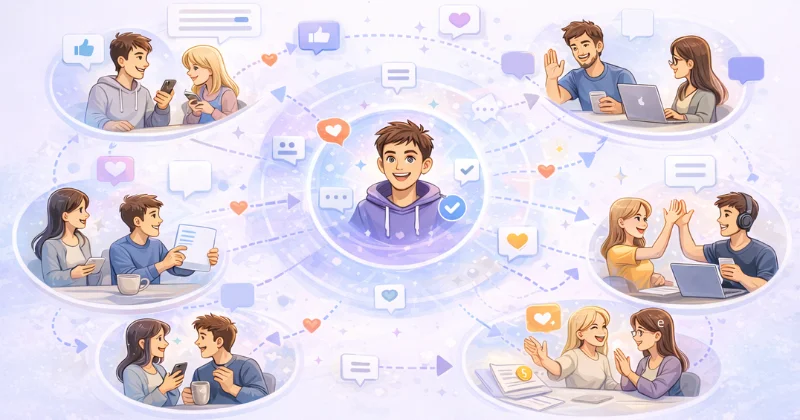
An online community isn't just a group of followers. It's people who come not only for your content but to connect with each other. They share experiences, help newcomers, create value together. And for businesses, this means one thing: loyalty you can't buy with any ad budget.
When you have an active community, you don't need to spend money acquiring customers. They recommend you to others themselves. You don't need to convince people to buy. They already trust you because they see you've created a place where they belong.
But here's the problem: most people create a Discord server, Telegram group, or Facebook community, post content for two months, and... nothing happens. People don't engage, don't talk, just read and leave. And the community owner thinks it doesn't work.
But the problem isn't the format. The problem is how you organize it.
The Problem: Why Most Online Communities Don't Work
Let's be honest. You created a Discord server for your audience. Set up channels, wrote rules. And a month later, it's empty. Silent. People join, look around, and leave.
Or you started a Telegram group for your business. Ran ads, got 500 members. Started posting useful content. And two months later, you see people just read but don't engage, don't react, don't buy.
Here are typical mistakes people make:
Mistake 1. Thinking a community is just a broadcast channel. Most people create a Telegram channel or Discord server and start posting content. But a community isn't one-way communication. It's a place where people talk to each other, not just read your posts. If you're just posting without creating conditions for interaction, it's not a community, it's just a channel.
Mistake 2. Not providing clear value. People join a community and don't understand why they're there. What's the purpose? What will they get? Who will they talk to? Without clear value, people just leave.
Mistake 3. Scattering audience across platforms. There's a Telegram channel, Instagram, Facebook group, Discord server. And each platform exists separately. The audience doesn't know where to go, where active discussions happen, where they can ask questions. And as a result, there's no activity anywhere.
Mistake 4. Not moderating or maintaining activity. The first two weeks, the community owner is active, answers all questions, starts discussions. Then disappears for a week. People see nobody's there and leave too.
Result: you spent time and money creating a community, and it's dead. And you think communities don't work.
But they do work. You just need to do it right.
The Solution: How to Build an Online Community That Actually Works
If you want to create a community that not only exists but brings real value to you and your audience, here's what to do.
1. Define a Clear Purpose
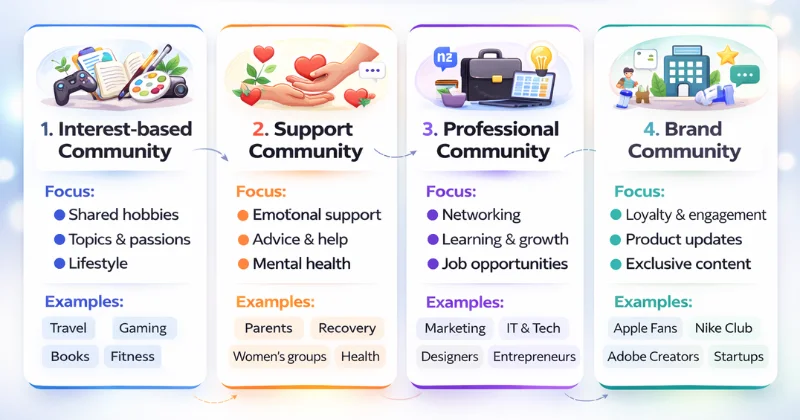
First and most important: your community must have a clear purpose. Not "we talk here" but a specific function:
Interest-based community. For example, Python developers, food photographers, new parents. People come to exchange experiences, advice, resources.
Support community. People facing similar challenges (health, career, relocation) come for support and understanding.
Professional community. Freelancers, entrepreneurs, industry specialists create communities for networking, knowledge sharing, joint projects. These often lead to collaborations and opportunities.
Brand-led community. Businesses create communities around their product or service to boost customer loyalty. Customers share tips, ask questions, feel part of something bigger.
When the purpose is clear, people understand why they're there, and activity grows naturally.
2. Choose the Right Platform
Different platforms work for different types of communities:
Discord. Originally for gamers, now used for all kinds of communities. Has voice channels, topic separation, member roles. Good for structured communities with multiple discussion topics.
Telegram. Fast, simple, widely used. Has both channels (one-way) and groups (discussion). Good for quick communication and updates.
Facebook Groups. Still popular, especially for business and lifestyle communities. Good for discussions, but Facebook algorithms often hide posts.
Reddit. Great for interest-based communities. Built-in moderation tools, voting system, threaded discussions.
Custom platform. Some businesses create communities on their own site (forum, chat). Gives full control but requires more resources to maintain.
The key: don't spread yourself thin. Pick one or two platforms and focus on them.
3. Encourage Participation, Not Just Post Content
Here's where most people fail. They think if they post useful content, people will start talking on their own. But that's not how it works.
You need to actively create conditions for interaction:
Ask questions. Not just "here's an article" but "what's your take on this?" or "who's dealt with this problem?".
Start discussions. Polls, votes, weekly topics. Anything that makes people speak up.
Request experiences. "Share your case", "tell us how you solved this". People love to share.
Host events. Live streams, Q&A sessions, meetups (online or offline). This creates a sense of community.
4. Moderate and Maintain Quality
A community without moderation quickly becomes chaos. Spam, conflicts, irrelevant content. People see this and leave.
So it's important to:
Set clear rules. What's allowed, what's not, how to communicate, how to share content.
Be present. If you're the community leader, you need to be active. Answer questions, start discussions, welcome new members.
Delegate moderation. When the community grows, find active members and make them moderators. This reduces your load and creates a sense of ownership for these people.
How Linkks.cc Helps Manage Online Communities
Here's where most people struggle: they have a Discord server, Telegram group, Instagram, Facebook group, their own website. And each platform exists separately. The audience doesn't know where to go. Newcomers get lost. Resources are scattered.
Linkks.cc solves this problem once and for all.
One Link for the Entire Community
Instead of giving people 5 different links (Discord, Telegram, YouTube, your site, signup form), you give them one link to your linkks page. And on that page, all your platforms live:
Telegram channel or group
Discord server
YouTube for stream recordings
Form for questions or signups
Event calendar or webinars
Anything else your community needs
A newcomer lands on your linkks page and immediately sees the entire ecosystem. Where to go for news, where active discussions happen, where to ask questions, how to register for events. Everything in one place.
Convenience for Members
People don't need to remember 5 links or search for them in old posts. They just go to your linkks page and see current information.
And when you add a new platform (say, launch a podcast or open a new Discord server), you just add a link to the linkks page. All community members get access automatically, without any "we moved" announcements.
Activity Analytics
Linkks shows you:
How many people visit your page
Which platforms they click through to most often
Which channel brings the most new members
Peak activity times
This lets you understand what works and where you need to boost activity.
Who This Is Especially Useful For
Linkks for online communities is perfect for:
Community leaders. If you manage a professional community (developers, designers, marketers), linkks helps collect all resources in one place: Discord server, Telegram chat, YouTube recordings, event registration forms.
Entrepreneurs and coaches. If you're building a community around your business or courses, linkks lets you collect the whole ecosystem: Telegram for news, Discord for discussions, signup forms, webinar calendar.
Content creators. If you have an audience on Instagram, TikTok, YouTube and want to bring them into one community, linkks becomes the central hub where people see all your platforms.
Businesses with brand communities. If you've created a community around your product, linkks helps direct people where they can get support, ask questions, share experiences.
Get Started in 10 Minutes
Here's what to do right now:
1. Go to linkks.cc and click "Create" 2. Create a page for your community 3. Add links to all platforms: Discord, Telegram, YouTube, forms, calendar 4. Write a brief community description (who you are, what it's about, what people will get) 5. Customize design to match your brand 6. Share this link everywhere: social media, website, email newsletters
Done. Now you have a central hub for your community, and people always know where to go.
And if questions come up, support is available through @LinkksSupportBot on Telegram. Fast, no email queues.
The Bottom Line
Online communities work. Billions of people in digital spaces, thousands of active communities across platforms. People want to be part of something bigger than just following a channel.
But for a community to work, you need clear purpose, right platform, participation encouragement, moderation. And most importantly, you need to collect everything in one place so people don't get lost.
Linkks.cc gives you everything you need: one link for the entire ecosystem, convenience for members, activity analytics. All in one place. In 10 minutes.
Ready to build your community?